4 Adorable Crochet Dog Amigurumi Patterns: Beagle, Dalmatian, Pug & Shiba Inu
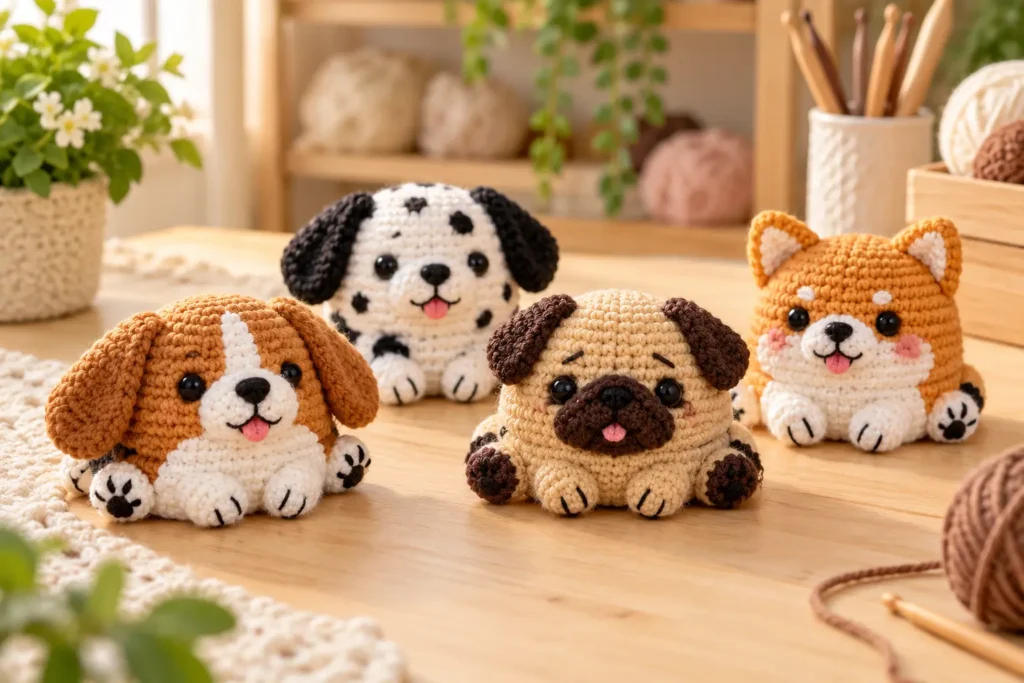
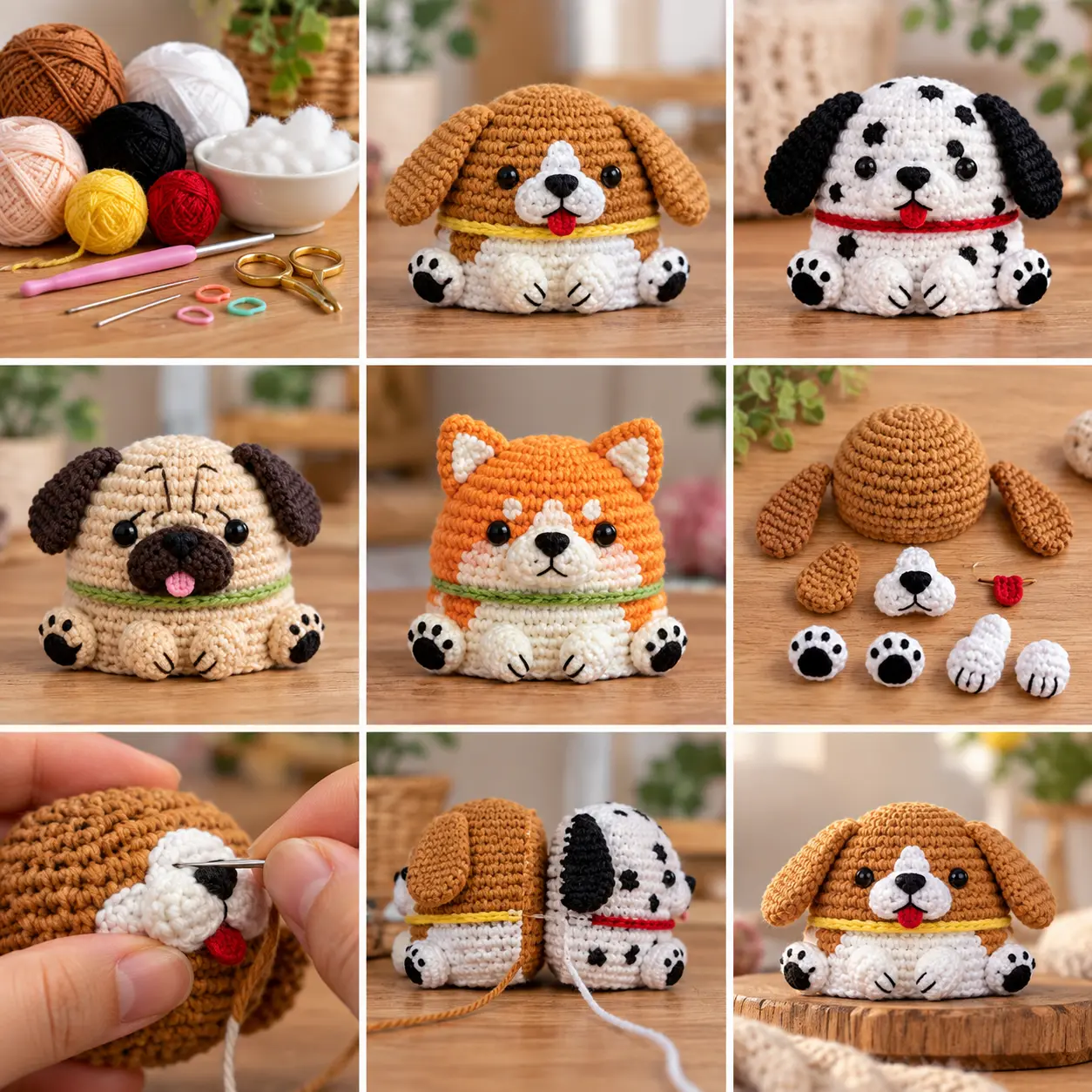
If you love tiny handmade animals, these crochet dog amigurumi patterns are a fun project to add to your crochet list. The collection features four recognizable breeds—Beagle, Dalmatian, Pug, and Shiba Inu—each with its own colors, facial details, ears, paws, and personality.
The finished dogs are intentionally small, making them suitable for displaying on a shelf, adding to a handmade collection, or giving as a cute crochet gift. According to the source pattern, each finished dog is approximately 6 cm tall when made with the recommended materials, although the final size will change with yarn choice and crochet tension.
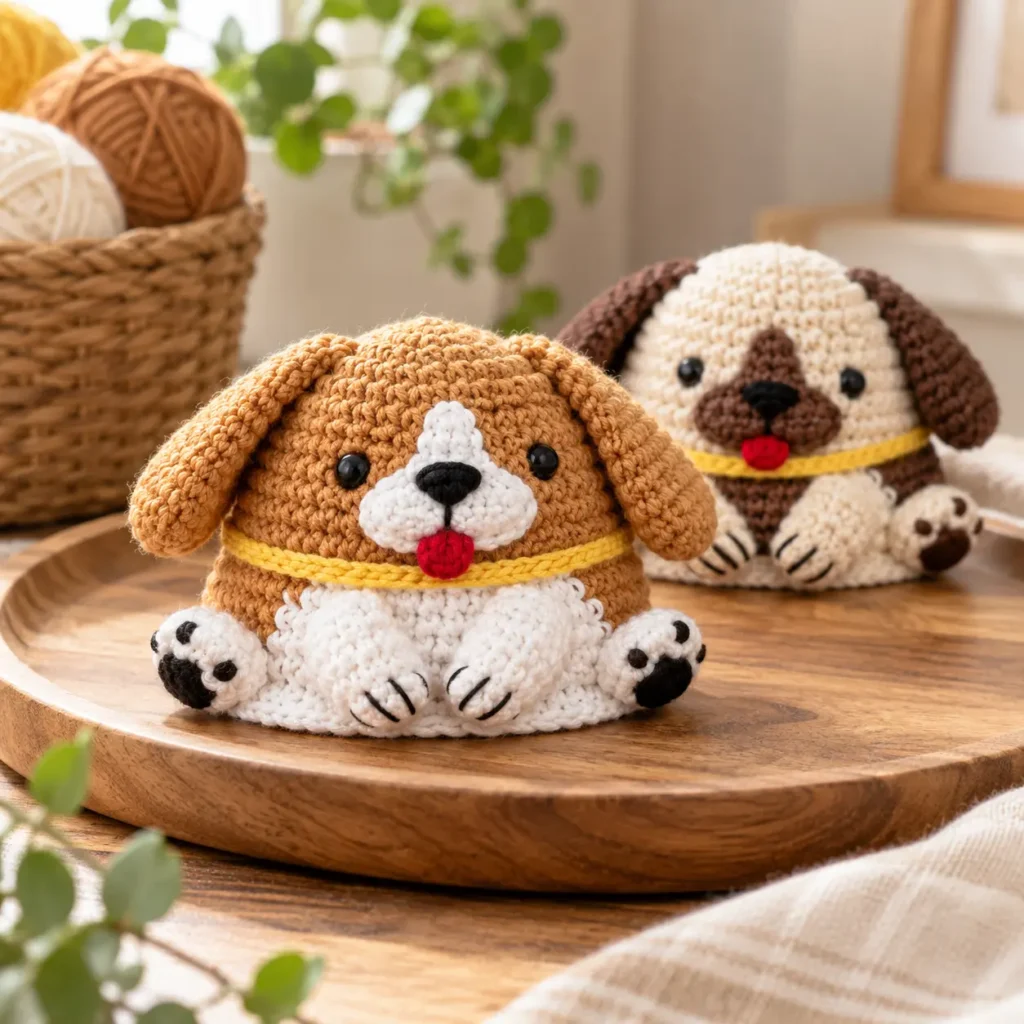
One particularly interesting feature is that the individual dogs can also be combined into a reversible crochet dog. That means two different dog designs can share one plush form, creating a toy that can be turned from one character into another.
Note: This article is an original editorial guide based on the uploaded source. It explains the projects, construction, materials, techniques, and creative process without reproducing the source pattern stitch-by-stitch.
What You’ll Need
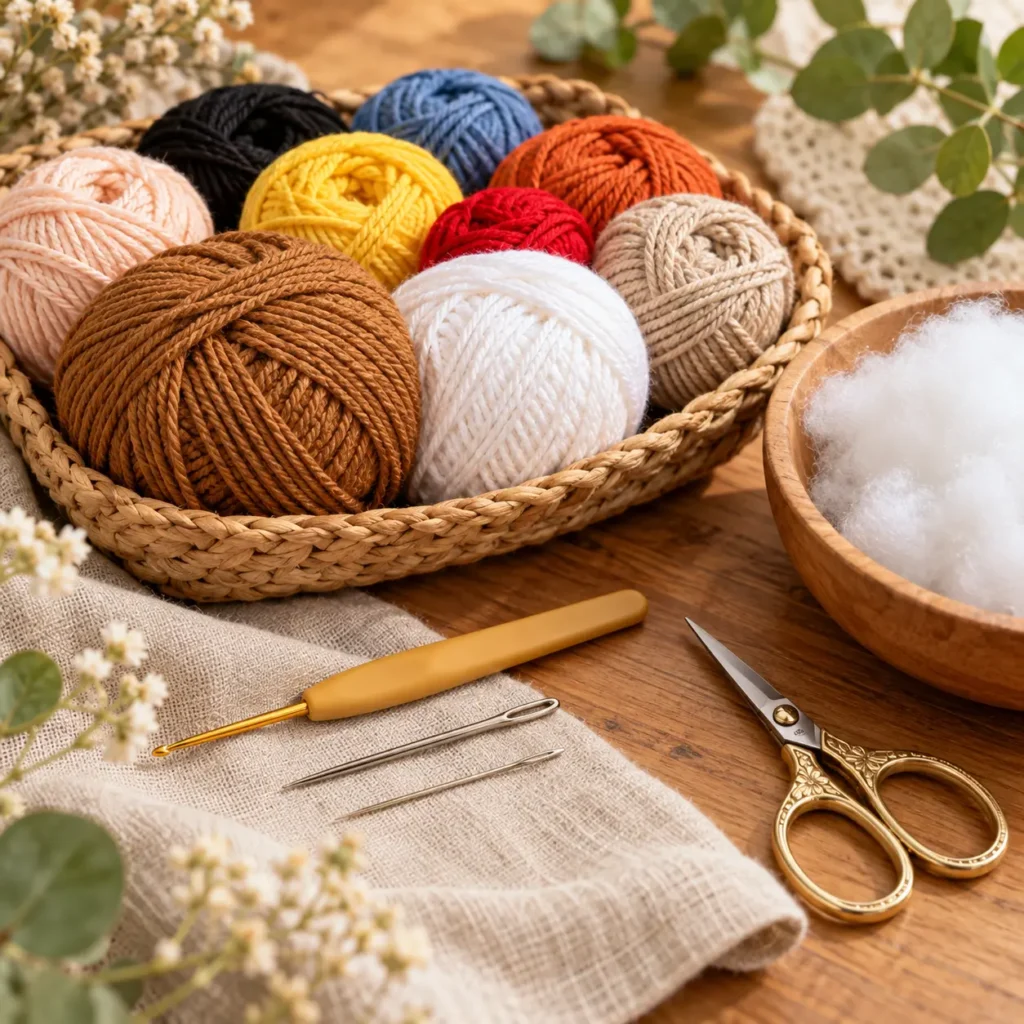
The four projects use a very similar basic toolkit, which makes the collection convenient if you want to crochet more than one dog.
Materials
You will need:
- Yarn suitable for a 2.0 mm crochet hook
- Fiberfill stuffing
- Tapestry needle
- Embroidery needle
- Scissors
- A small amount of yarn in the colors needed for the particular dog
The source uses 4-ply cotton-blend yarn as its example and specifies different color combinations for each breed.
Tools
A 2.0 mm crochet hook, or another size appropriate for your yarn, is specified. A stitch marker or a short piece of contrasting yarn is also useful for keeping track of the beginning of continuous rounds.
Because these are small amigurumi, keeping your tension consistent is especially important. Uneven tension can change the proportions of the body and make the individual pieces harder to assemble neatly.
Crochet Stitches and Techniques
The source assumes familiarity with basic US crochet terminology. Some of the techniques that appear throughout the projects include:
- Magic ring
- Single crochet
- Single crochet increases
- Single crochet decreases
- Chain stitches
- Slip stitches
- Front-loop and back-loop work
- Surface slip stitches
- Invisible finishing
- Sewing flat crocheted pieces
- Bobble stitches
- Embroidered details
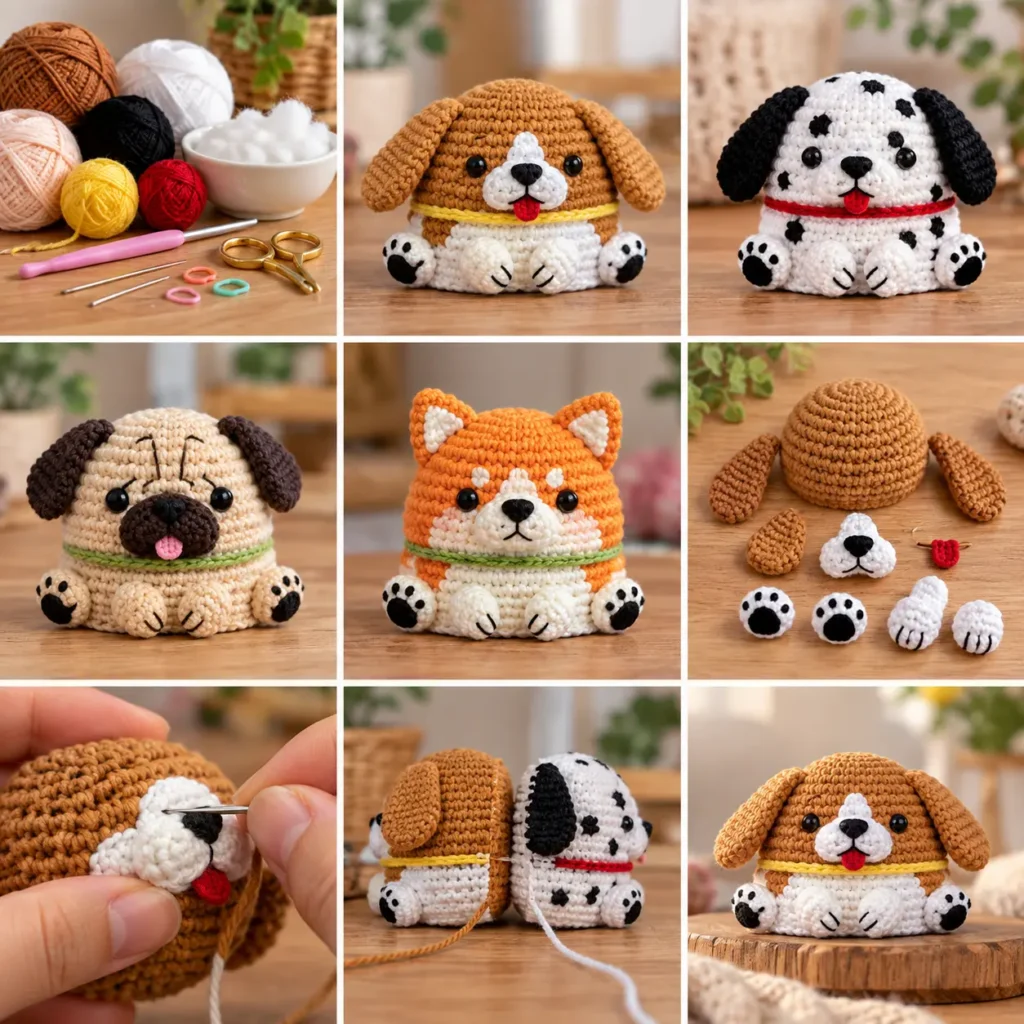
The source specifically demonstrates the construction of a bobble stitch and explains an invisible finishing method. It also illustrates surface slip stitches and sewing techniques with step-by-step photographs.
If you are new to amigurumi, it is worth becoming comfortable with these techniques before beginning. The source itself recommends reading through the pattern completely before starting.
Meet the Four Crochet Dogs
1. Crochet Beagle Amigurumi
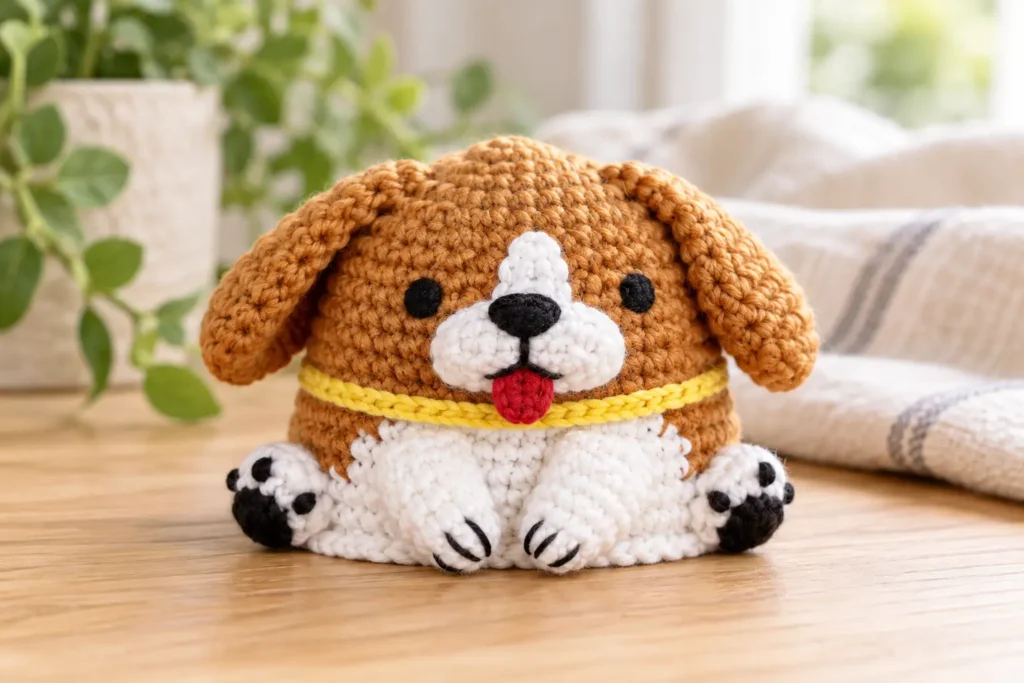
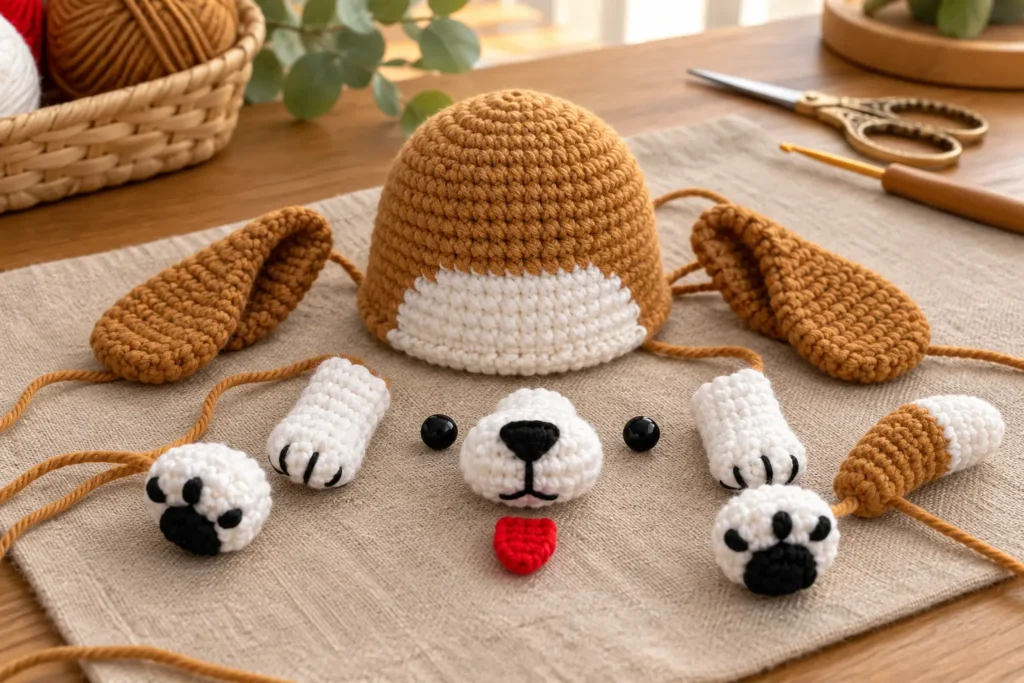
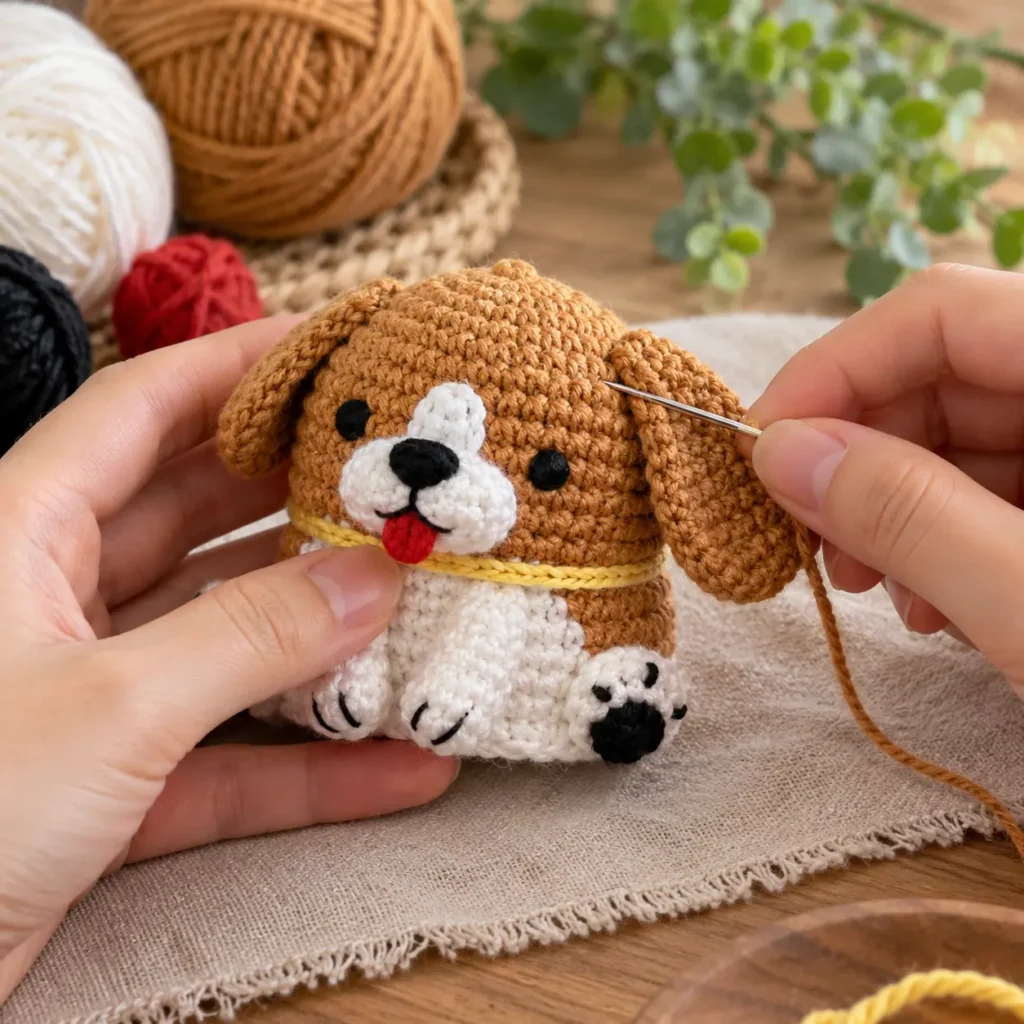
The Beagle has a warm brown base with contrasting white areas, dark details, and a colorful collar-like surface detail. Its floppy ears and small muzzle give the finished piece a recognizable dog-like silhouette.
The body and head are worked as one main rounded piece. Separate components are then made for the ears, front legs, muzzle, paws, tail, and tongue.
One of the charming details is the tiny tongue, which adds extra character to the face. The paws also use bobble stitches and embroidery to create a more dimensional appearance.
The final assembly involves positioning the muzzle, ears, front legs, paws, and tail before embroidering the eyes, nose, and mouth.
Beagle finishing tip
The Beagle’s visual identity depends heavily on the contrast between its brown body, white muzzle and lower section, dark details, and bright accent color. When recreating the look, keep your color changes clean and your embroidery controlled.
2. Crochet Dalmatian Amigurumi
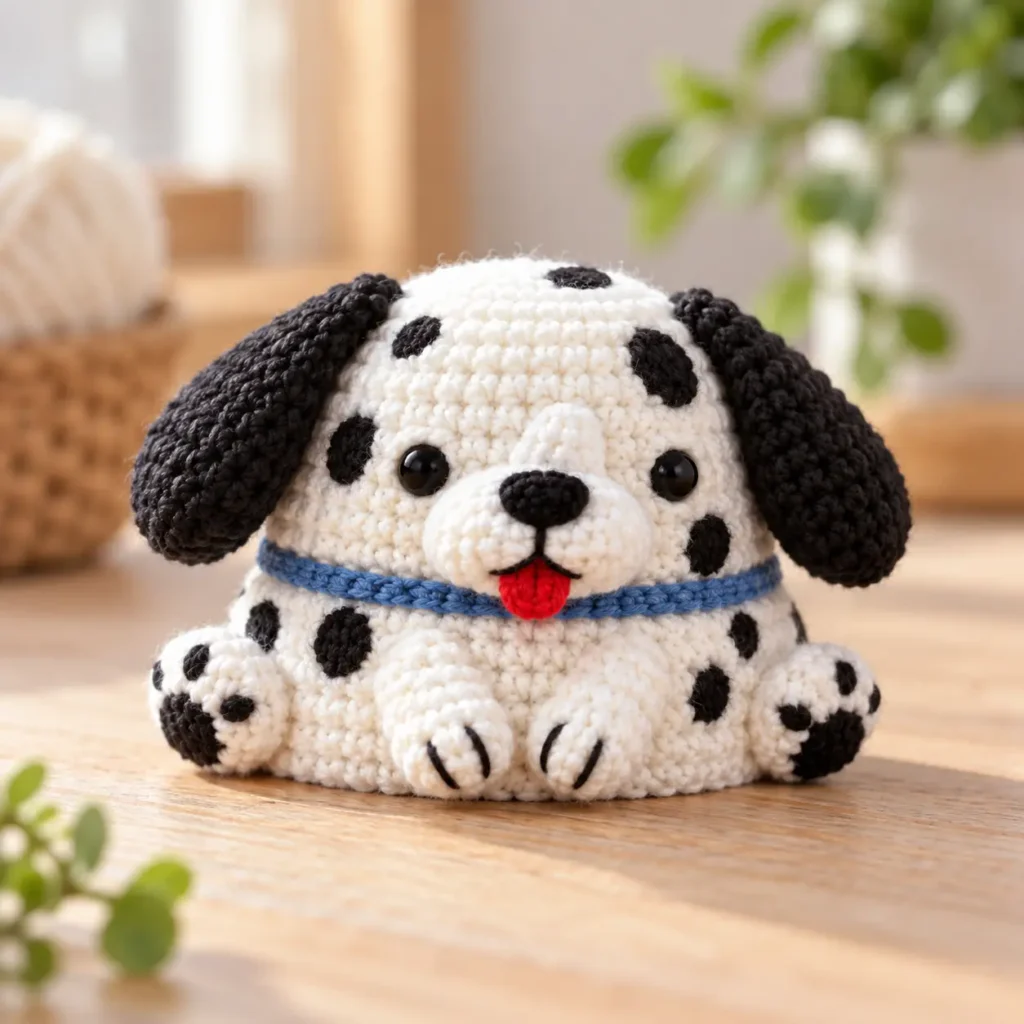
The Dalmatian takes a completely different visual direction. Its white base is decorated with black spots, while blue, peach, and red accents add color.
The ears are constructed separately, while the muzzle, front legs, paws, and tail are added afterward. The paws use peach-colored details and bobble stitches, creating a soft contrast against the white body.
The most recognizable feature is, of course, the spots. The source explains that black yarn can be embroidered onto the body in different ways to create spots of different visual sizes.
This makes the Dalmatian especially interesting from a design perspective because the basic body can remain relatively simple while the embroidered markings give the finished dog its personality.
Dalmatian finishing tip
Avoid making every spot identical. A natural-looking arrangement comes from varying their placement and visual size while keeping them small enough to suit the miniature scale.
3. Crochet Pug Amigurumi
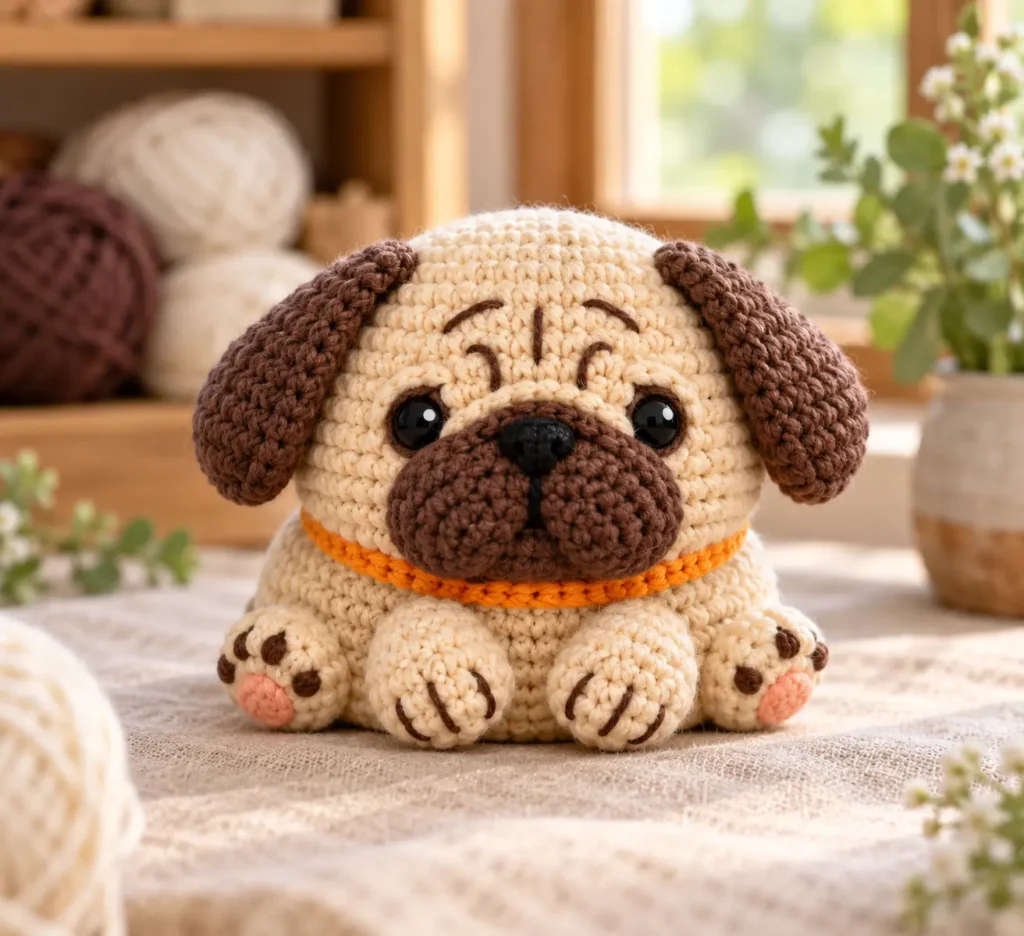
The Pug uses a light beige body with dark brown, orange, peach, and black details. Its defining characteristics are the darker muzzle, small folded ears, forehead embroidery, and compact body shape.
The source includes separate pieces for the ears, muzzle, front legs, paws, and tail. The facial details are especially important for this design.
The forehead receives additional embroidery to suggest the Pug’s characteristic wrinkles and eye ridge. The source specifies different yarn thicknesses for some of these embroidered details.
Pug finishing tip
Take your time with the face. On a miniature amigurumi, even a small change in the position of the eyes, muzzle, or embroidered lines can noticeably change the expression.
4. Crochet Shiba Inu Amigurumi
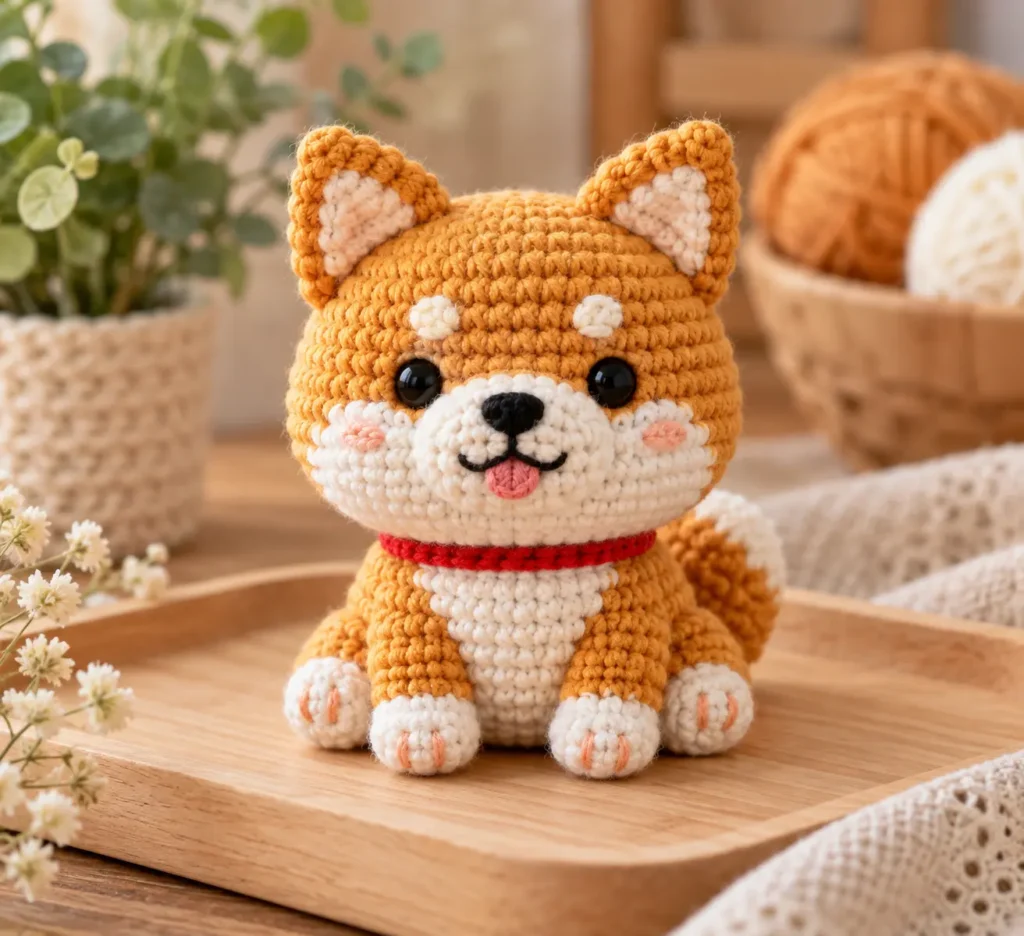
The Shiba Inu has a warm light-brown and light-beige color combination, accented with peach, red, and black. Its pointed ears immediately distinguish it from the floppy-eared dogs in the collection.
The head and body use alternating light-brown and light-beige sections. The source also adds a red surface-slip-stitch detail around the body.
The ears combine two colors, while the muzzle is made separately. The front legs, paws, and tail are then assembled onto the body.
The face receives embroidered eyes, nose, and mouth, along with small light-colored markings above the eyes.
Shiba Inu finishing tip
The pointed ears are a major part of the breed’s silhouette, so make sure they are positioned symmetrically before sewing them permanently into place.
Assembly: Where the Personality Appears
One of the most important stages in any amigurumi project is assembly.
Crocheting the individual pieces is only part of the process. The placement of the muzzle, ears, legs, paws, tail, eyes, and embroidered features determines the expression and overall character of the finished dog.
For all four designs, the source provides specific placement guidance using body and head rounds. Rather than rushing through this stage, it is helpful to temporarily position the pieces with pins or small removable markers before sewing.
The source also recommends lightly stuffing the muzzle where specified. The main body is filled with fiberfill, while several smaller pieces are deliberately left unstuffed.
How to Make the Dogs Reversible
The most unusual feature in this collection is the reversible option.
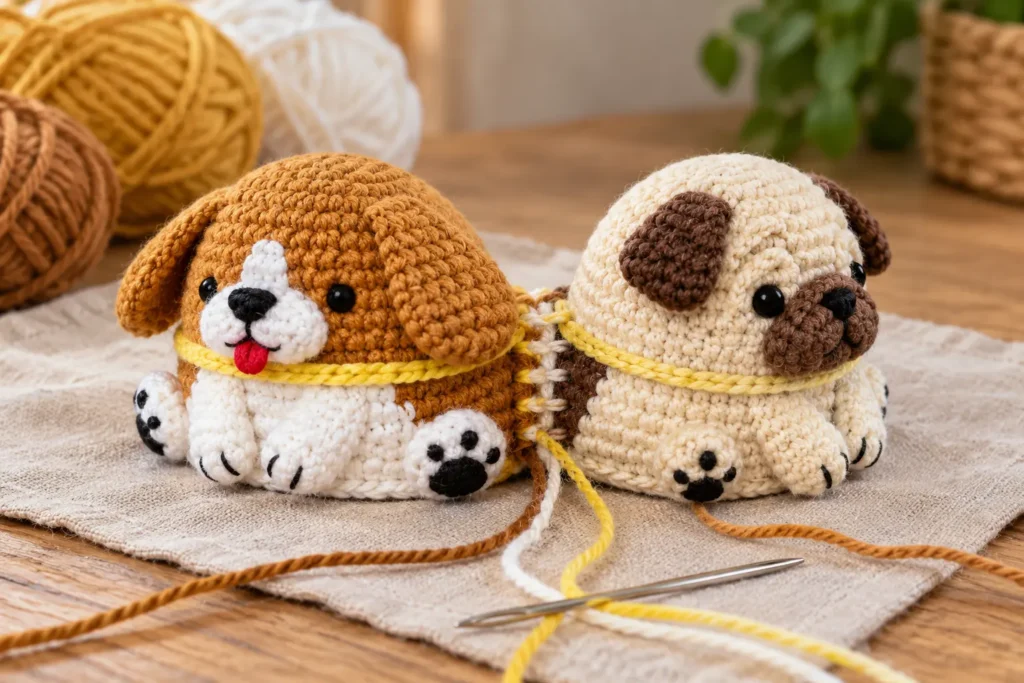
Instead of finishing one dog as a conventional plush, you can pair two compatible dog amigurumi. The source recommends making both dogs with the same yarn weight, hook size, and stitch tension so their dimensions remain compatible.
The joining process uses two dogs:
- One dog has a shorter yarn tail.
- The second dog retains a longer yarn tail for joining.
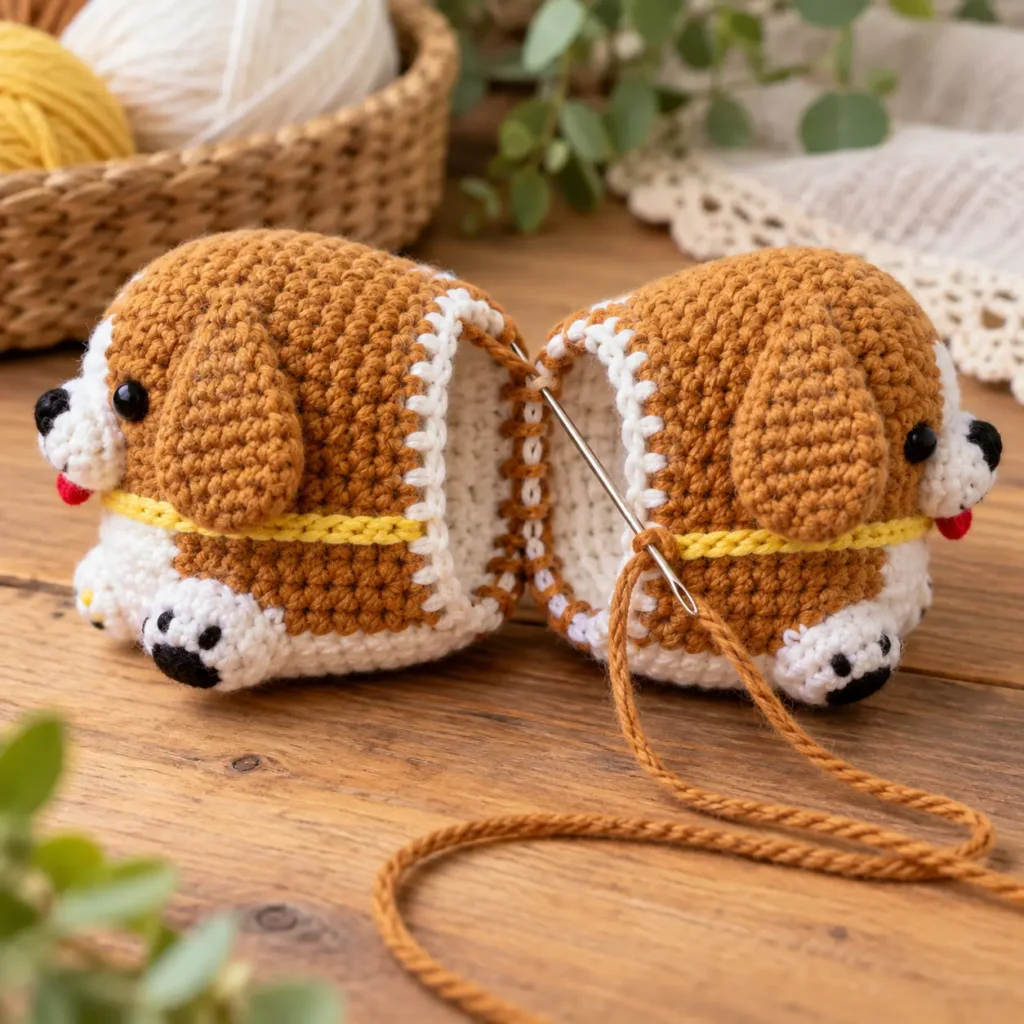
- The dogs are turned so their wrong sides face outward during the initial joining stage.
- One dog is then positioned inside the other.
- The final rounds are sewn together through the back loops.
The source notes that the two faces can be aligned because the dogs do not share a common crocheted section.
This creates a fun two-in-one toy that can be turned to reveal a different dog.
Helpful Crochet Tips
Keep your tension consistent
Small amigurumi are particularly sensitive to tension changes. Try to keep the same tension throughout the project and avoid crocheting so tightly that the fabric loses its flexibility.
Count your stitches
A single missed increase or decrease can alter the shape of a miniature body. Counting each round is worth the extra few seconds.
Use a stitch marker
Since most of the main body work is performed in continuous rounds, marking the beginning of the round makes it much easier to stay oriented.
Plan your color changes
Several designs use surface slip stitches or color changes as decorative features. Clean color transitions help the finished dog look polished.
Don’t rush the embroidery
Eyes, noses, mouths, wrinkles, spots, and toes are small details, but they have a huge effect on the final expression.
Read before starting
The source strongly recommends reading through the complete pattern before beginning. This is particularly useful when working on the reversible version because the yarn tails and finishing choices affect how the two dogs are joined.
Frequently Asked Questions
-
How big are these crochet dog amigurumi?
The source states that each dog is approximately 6 cm tall when made with the listed materials, although the final size varies according to yarn and tension.
-
What crochet hook size is used?
The source specifies a 2.0 mm crochet hook, or another size suitable for the yarn being used.
-
What type of yarn is recommended?
The source uses 4-ply cotton-blend yarn as its example and recommends using yarn of the same size throughout each dog.
-
Are these beginner patterns?
The source labels all four designs Advanced Beginner. They use familiar amigurumi techniques but also involve separate components, embroidery, color work, and assembly.
-
Can two dogs be combined into one reversible toy?
Yes. The PDF contains a separate three-page section explaining how two finished dog amigurumi can be joined into a reversible toy.
-
Do all four dogs use the same colors?
No. Each breed has its own palette. For example, the Beagle uses brown, white, peach, black, yellow, and red, while the Dalmatian uses white, black, blue, peach, and red.
-
Is stuffing needed for every piece?
No. The source specifically leaves some small pieces such as certain legs and tails unstuffed, while the main body and selected muzzle sections are stuffed. Follow the individual project instructions for the exact components.
Final Thoughts
These four crochet dog amigurumi patterns offer a nice variety of techniques without changing the overall miniature-dog concept.
The Beagle focuses on floppy ears and contrasting colors, the Dalmatian stands out through embroidered spots, the Pug relies heavily on its expressive face and wrinkles, and the Shiba Inu gets much of its character from its pointed ears and warm color combination.
If you enjoy small crochet projects, the reversible option makes the collection even more interesting. With two compatible dogs joined together, one handmade piece can reveal two different characters.
Love tiny crochet animals? Explore more free crochet ideas, amigurumi inspiration, and creative handmade projects here on Crochetya, and come back soon for another crochet project.